BRIDGES
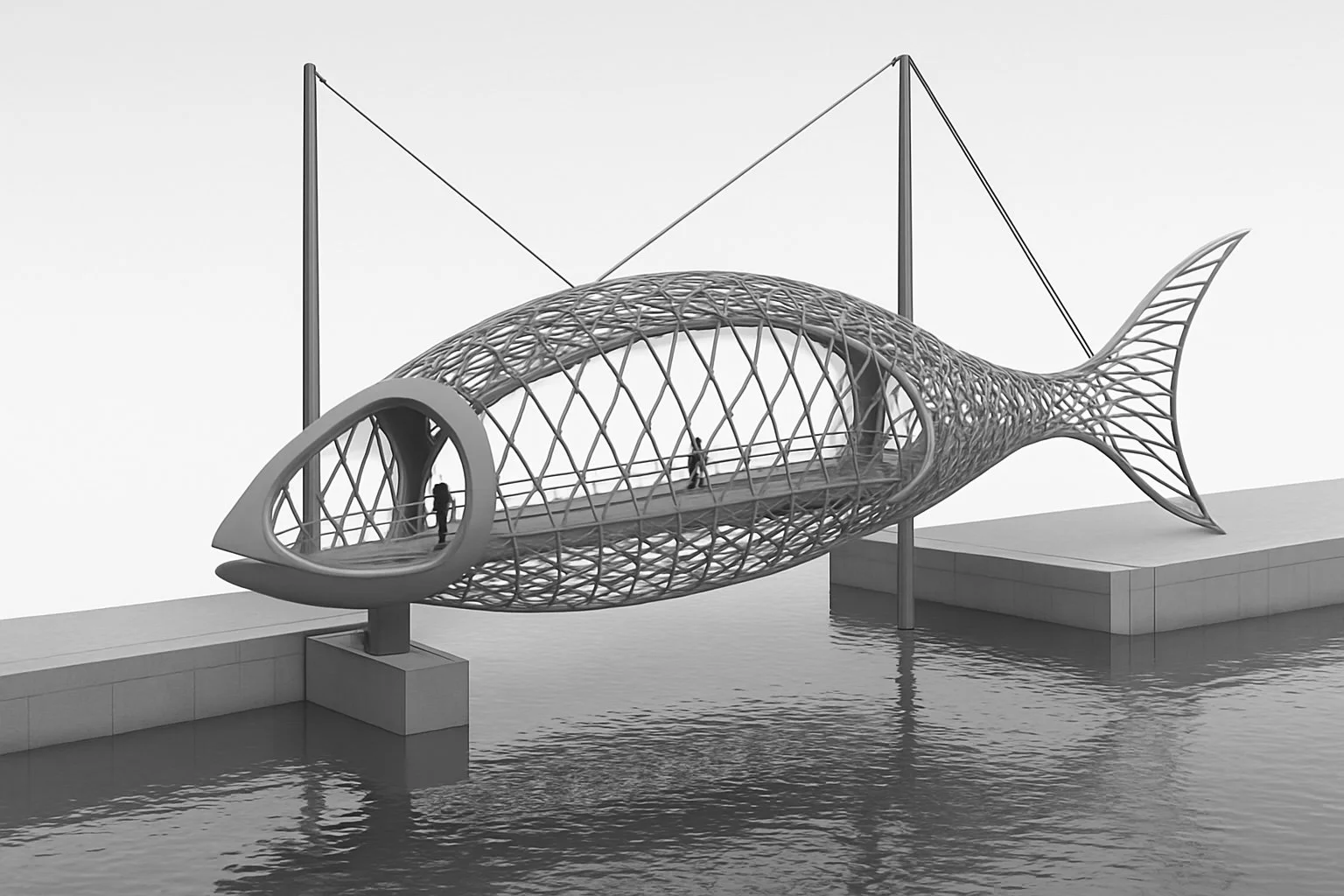
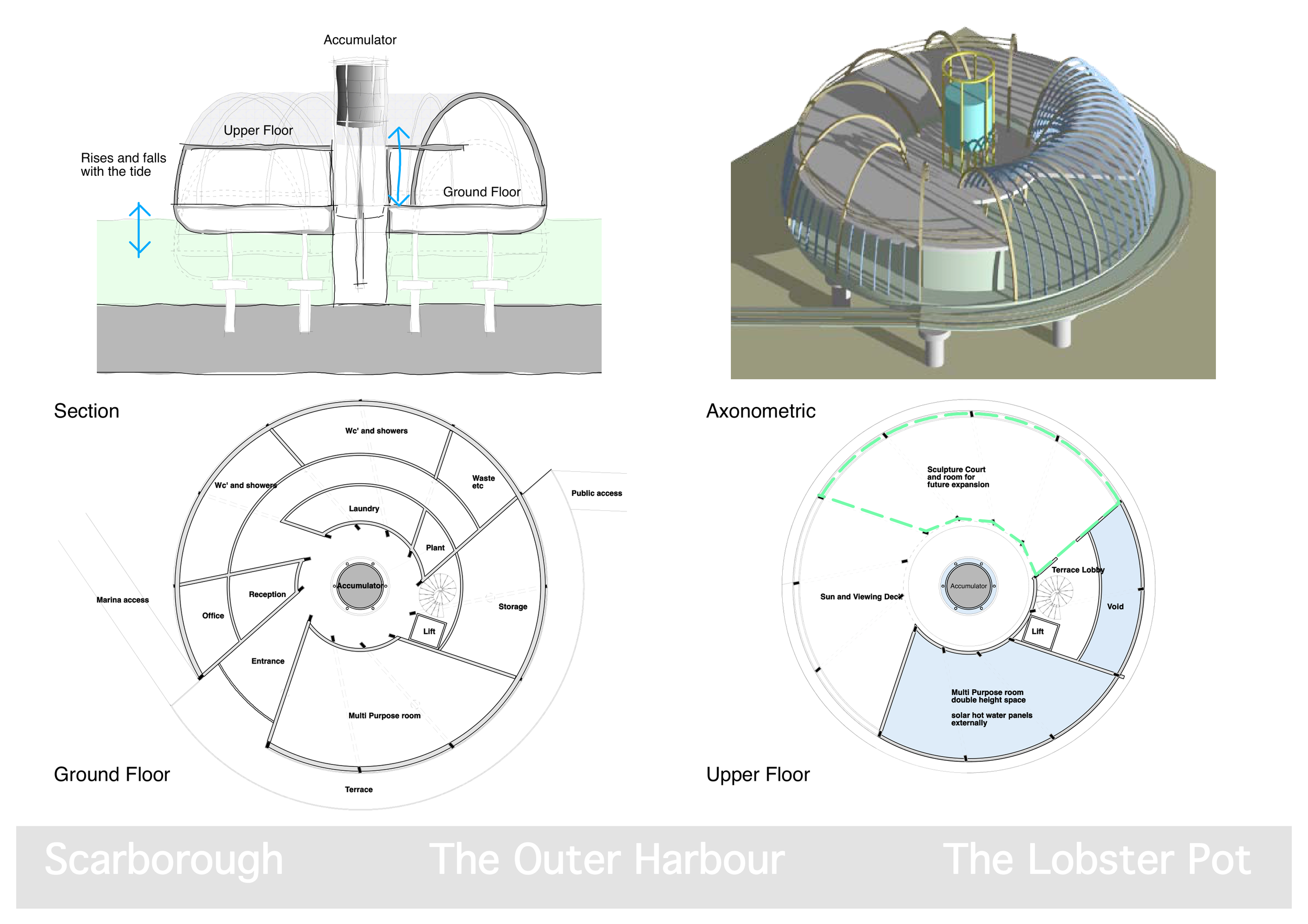
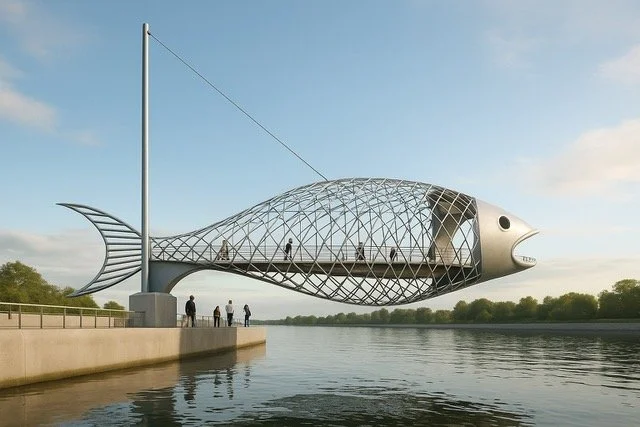
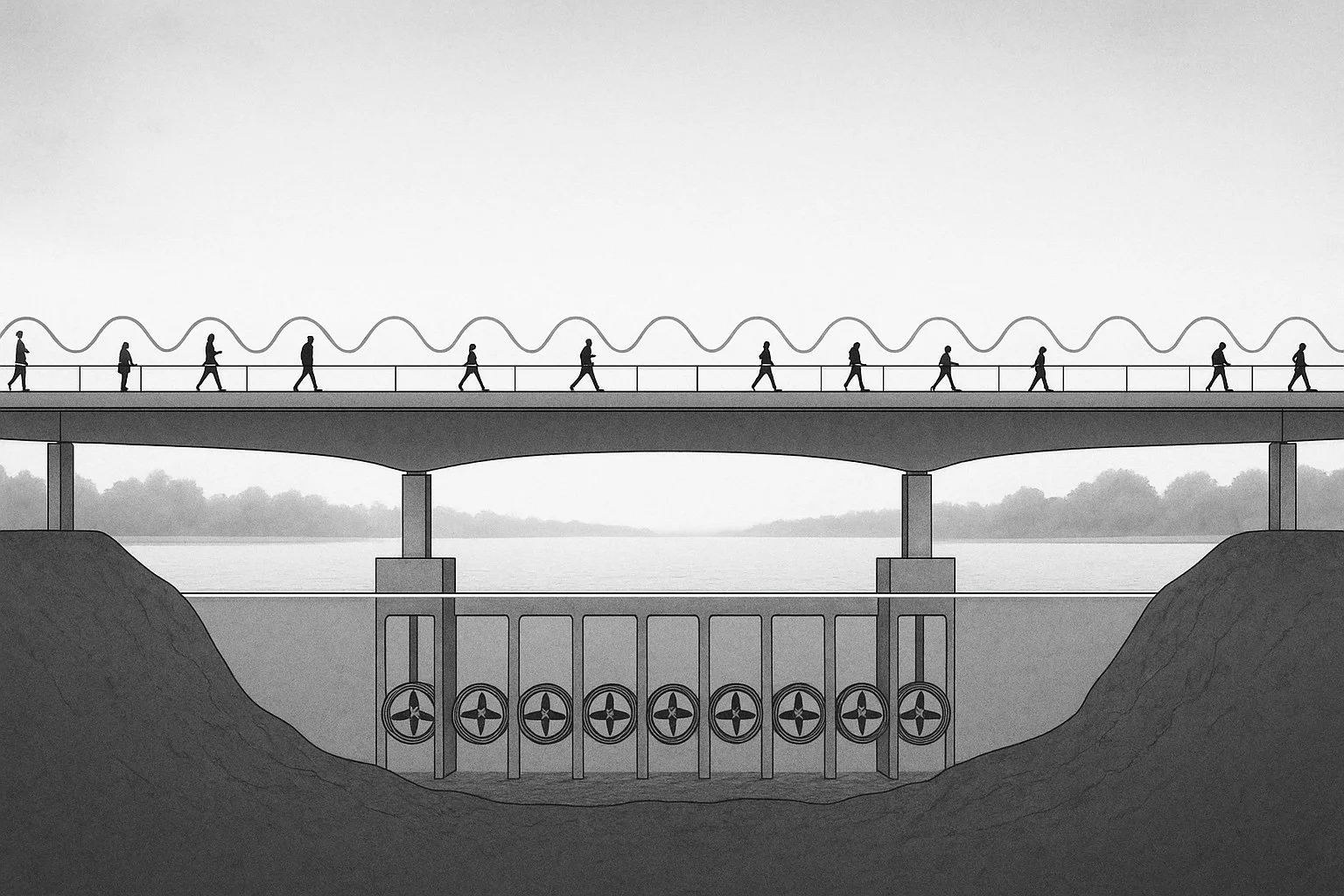
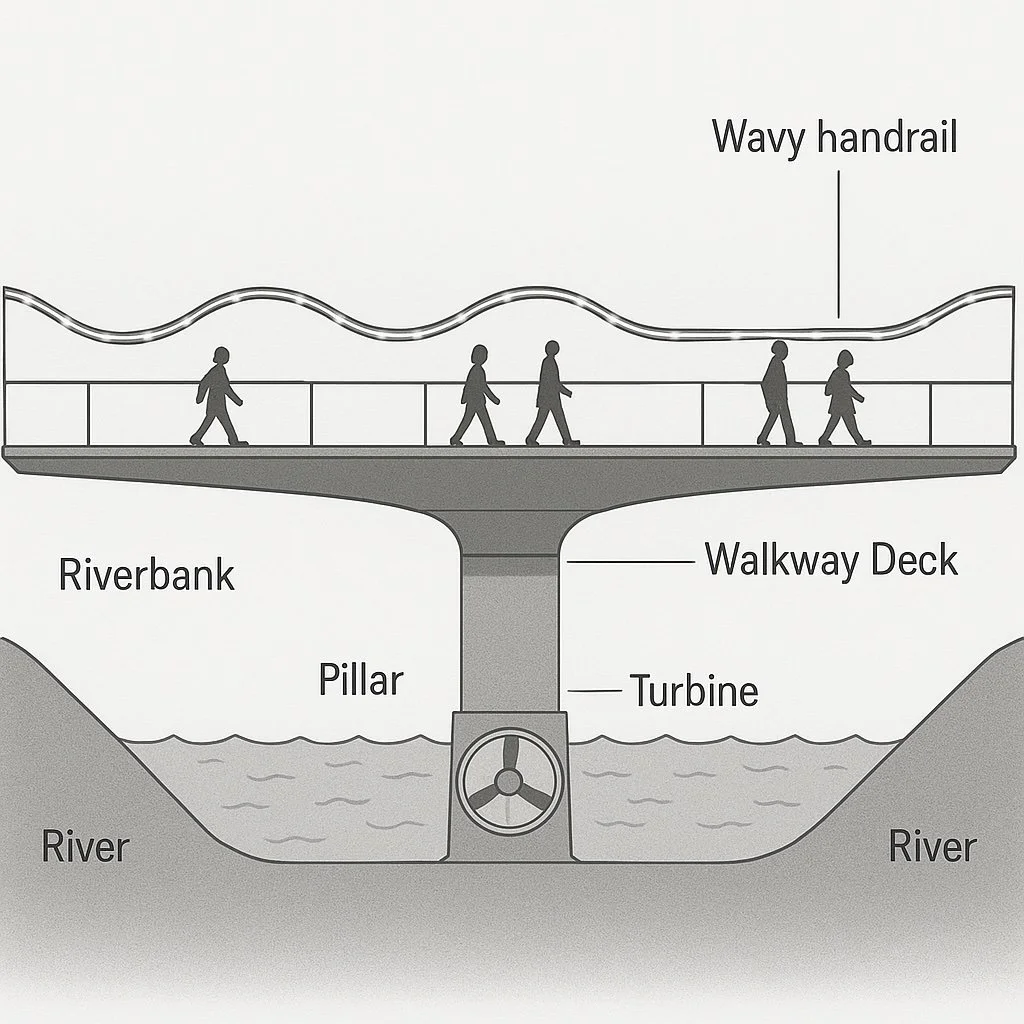
On a few occasions, the opportunity to think about a bridge has come my way. These are two designs. One is the Fish Bridge, conceived with Johnathan Dransfield during the Heartlands Project in Cornwall. It was a response to a competition for a lifting bridge in Scarborough. The other, the Turbine Bridge, or Electric Bridge, emerged from discussions with Ove Arup about the Solway Firth. I thought it might be fun (and instructive) to combine a bridge with turbines, which is why it's called the Electric Bridge.
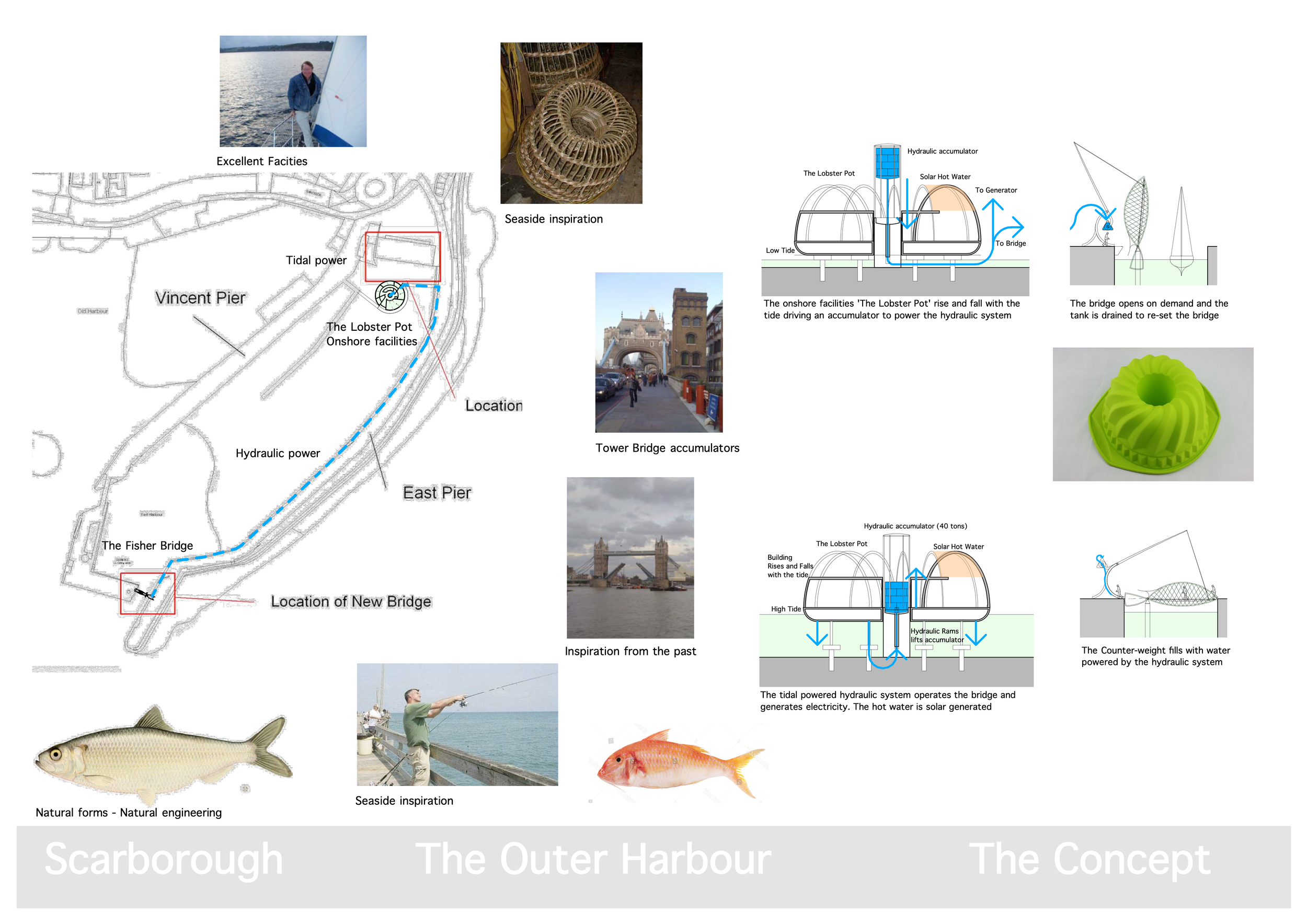
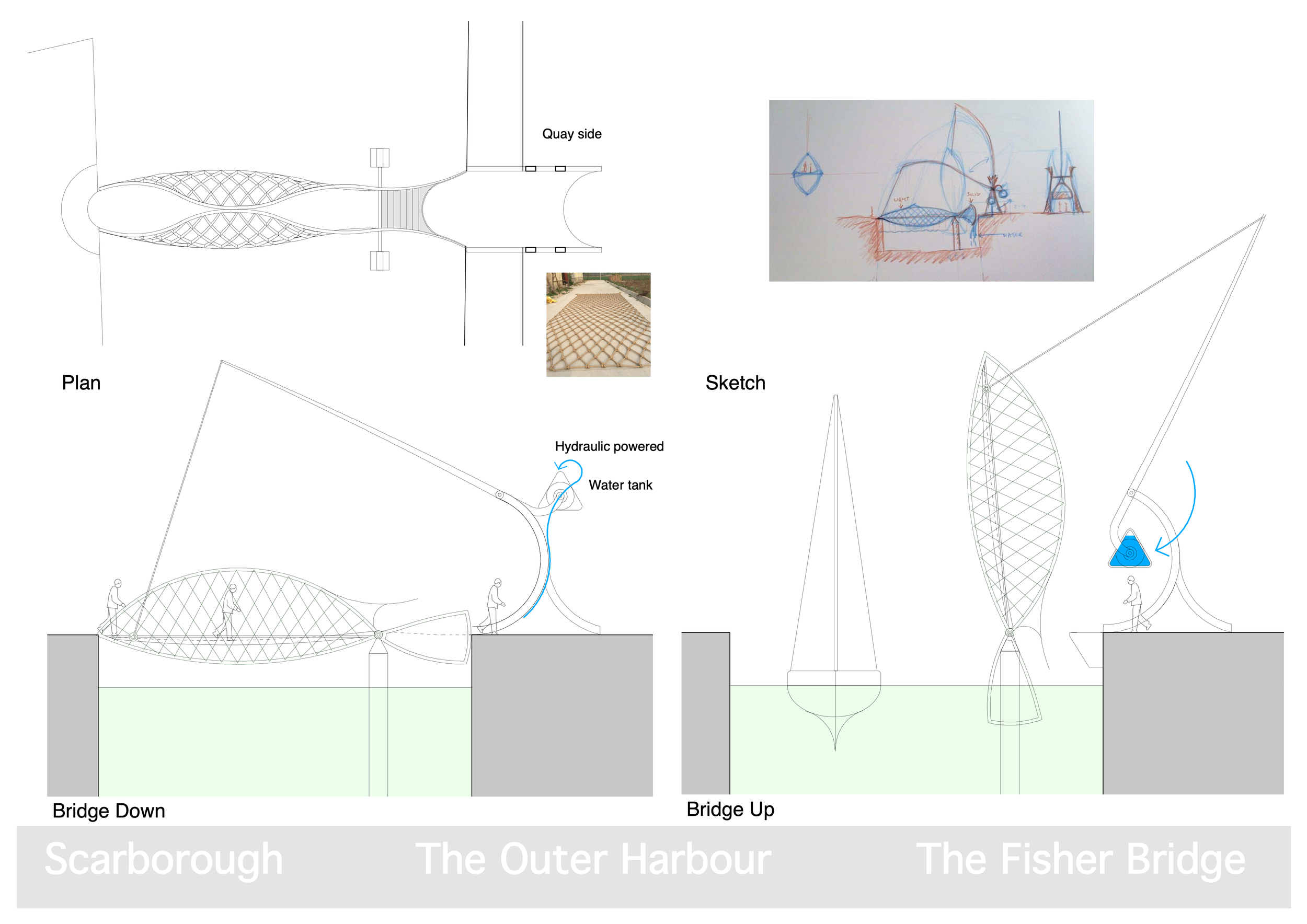
The recent AI renderings are not entirely accurate, but if you compare the sketches with the original CAD drawings, you will see that the Fish Bridge is a cable-stayed structure. It lifts using a powered system, with a water accumulator housed within the onshore visitor centre. The same method was used for Tower Bridge in London and the Albert Dock in Liverpool. A jelly mould inspired the form; you can just make out the edge of this green element. As shown, people can walk through the fish, entering at the tail and exiting at the mouth, or vice versa. The lifting mechanism is a long, fishing-rod-shaped arm, with a hook that engages in the fish’s mouth—something that may not be obvious in the image.
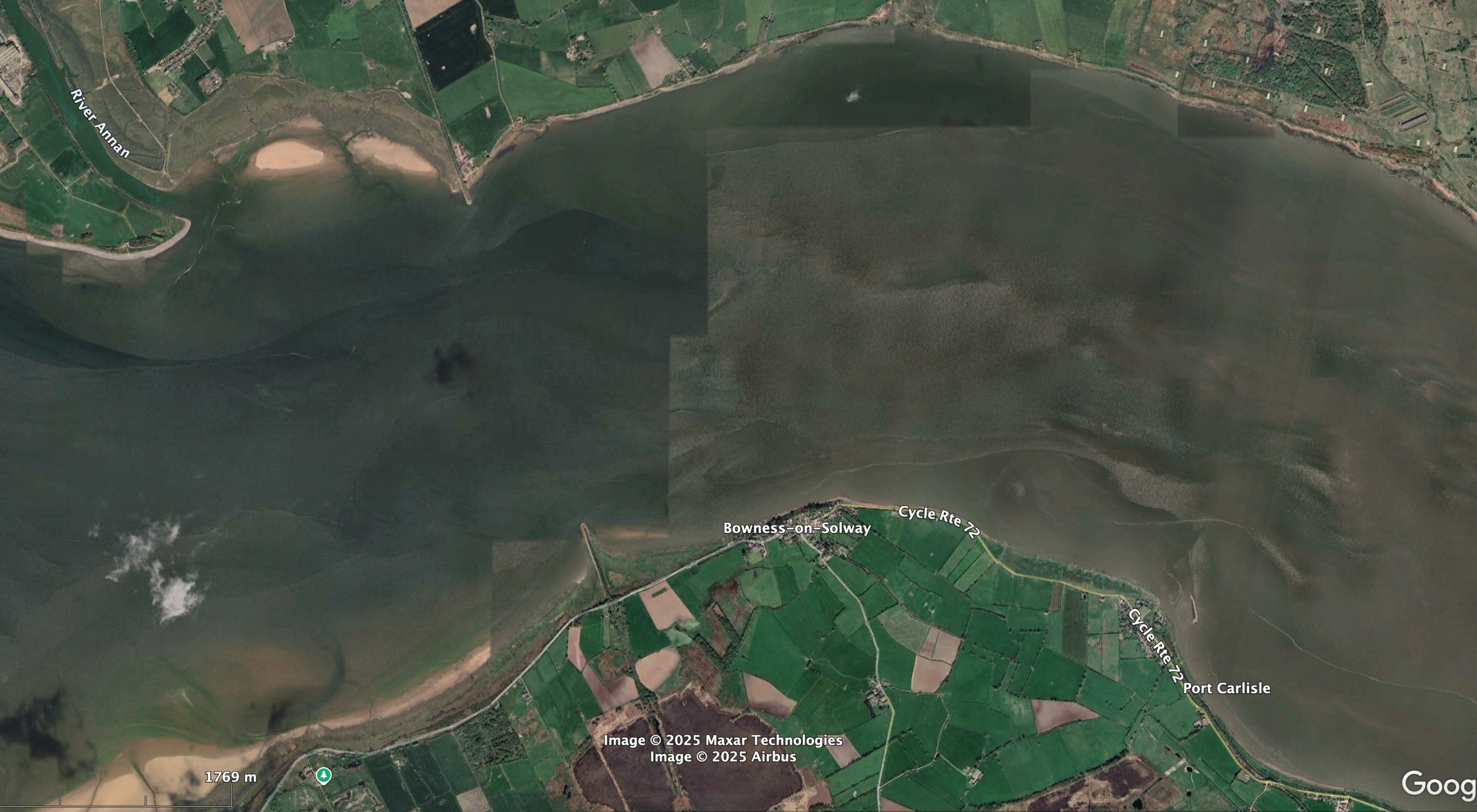
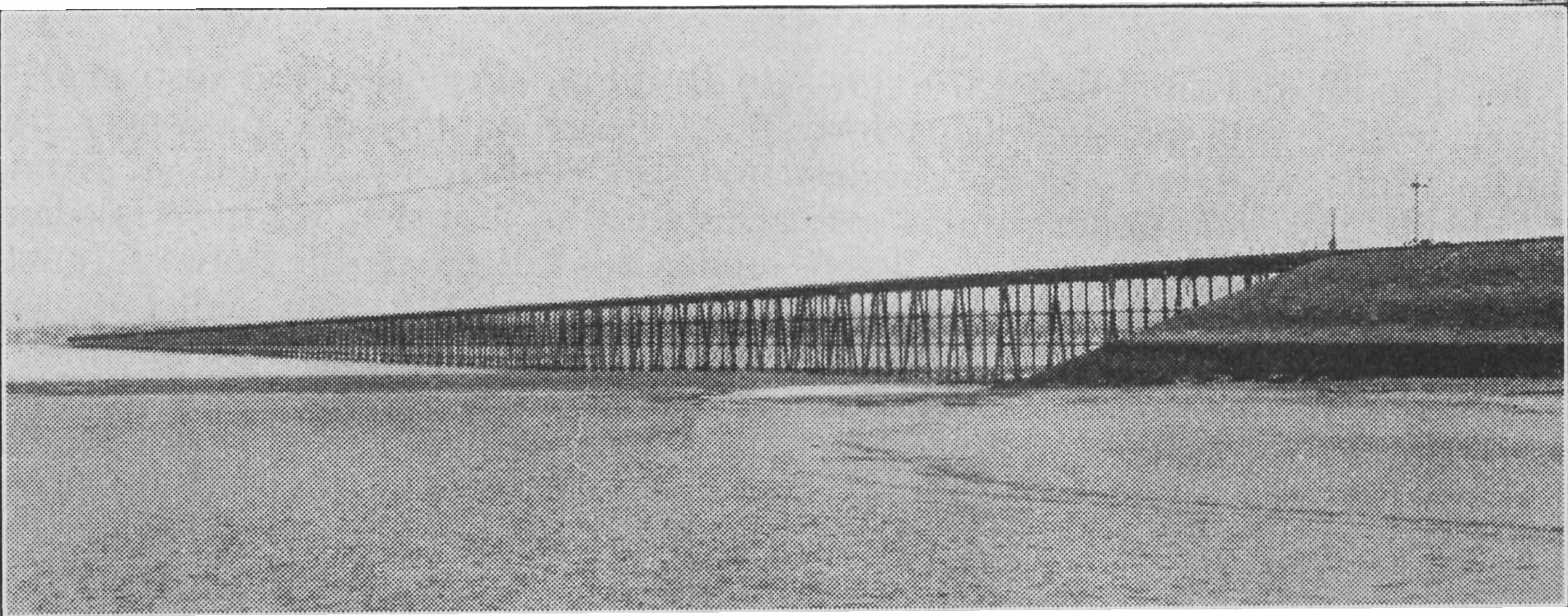
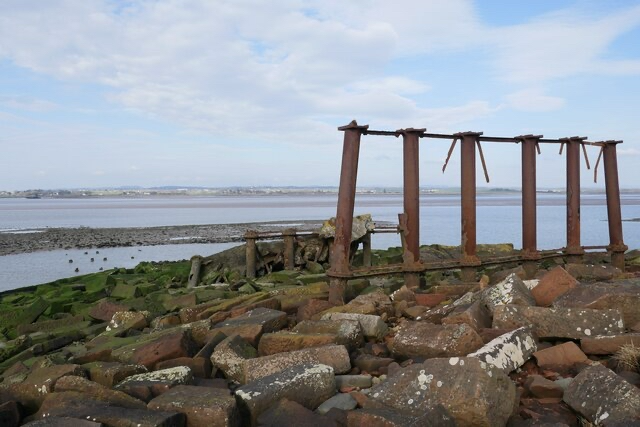
The Turbine Bridge (or “Electric Bridge”) is, in most respects, a conventional piece of engineering. However, I did consider making it fully floating, subject to the tidal conditions in the Solway Firth. Look closely at the image, and you will also notice the footings of a former railway crossing of the inner Solway: the Solway Viaduct of the Solway Junction Railway, which ran between Bowness-on-Solway (Cumbria) and the Annan/Kirtlebridge area (Dumfries & Galloway). It opened for mineral traffic in September 1869, later carried passengers, closed to traffic in 1921, and was dismantled in the mid-1930s, although shoreline remnants are still visible.
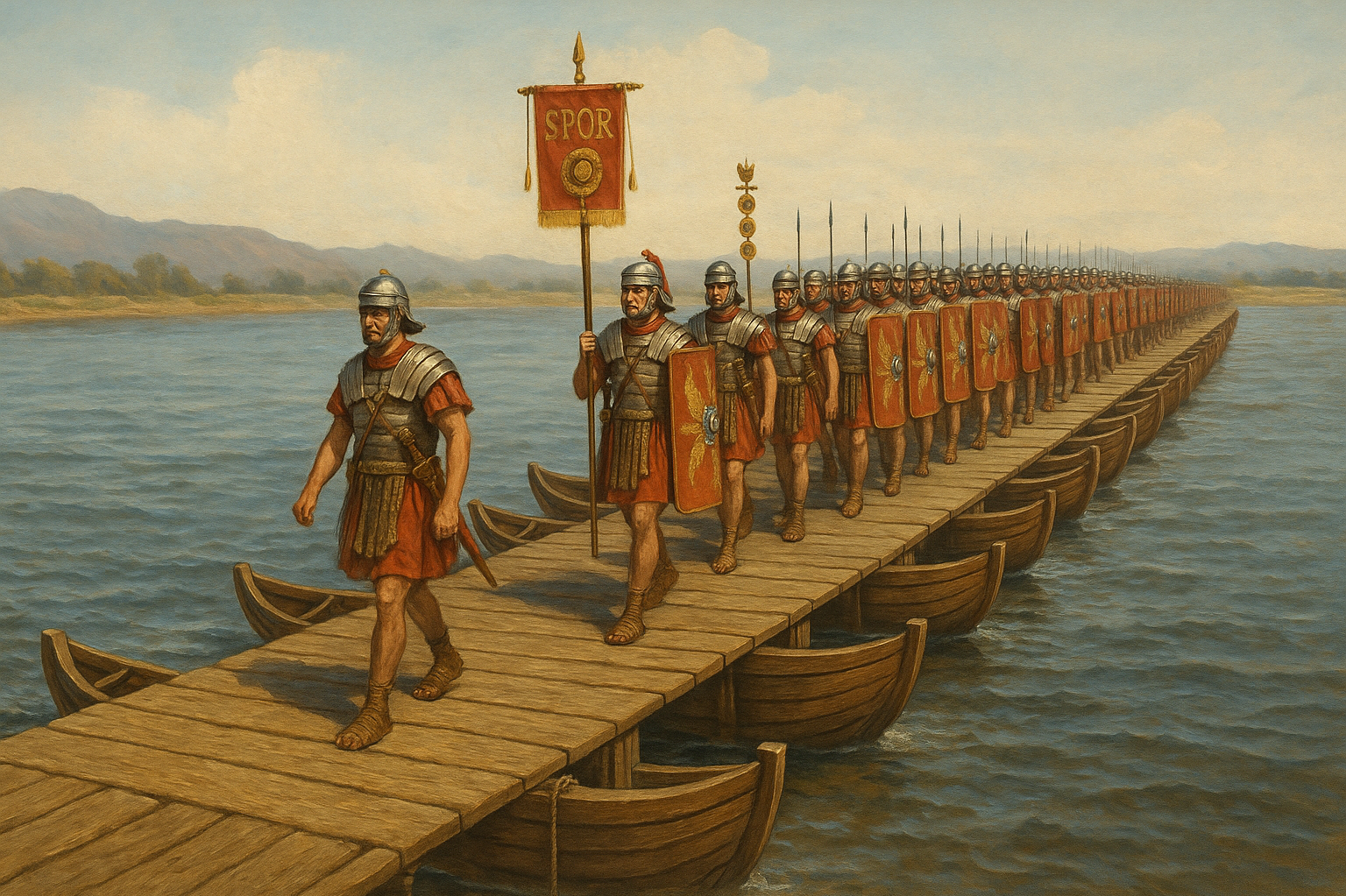
Caesar pontem navalem per Solvam ducit.
Temporary Desk Bridge
The wavy line of lights is triggered by a series of pressure-sensitive mats in the walkway, so that at dusk and at night, the lighting traces people’s movement across the bridge. The same system works for bicycles, of course. This type of responsive lighting could be deployed at other sites with similar crossings and night-time footfall.
Floating bridges are an old idea. Here’s Julius Caesar, De Bello Civili 1.61.6:
“Ad eum locum fluminis navibus iunctis pontem imperant fieri”
“To that point of the river, they ordered a bridge to be made, with the boats joined together.”

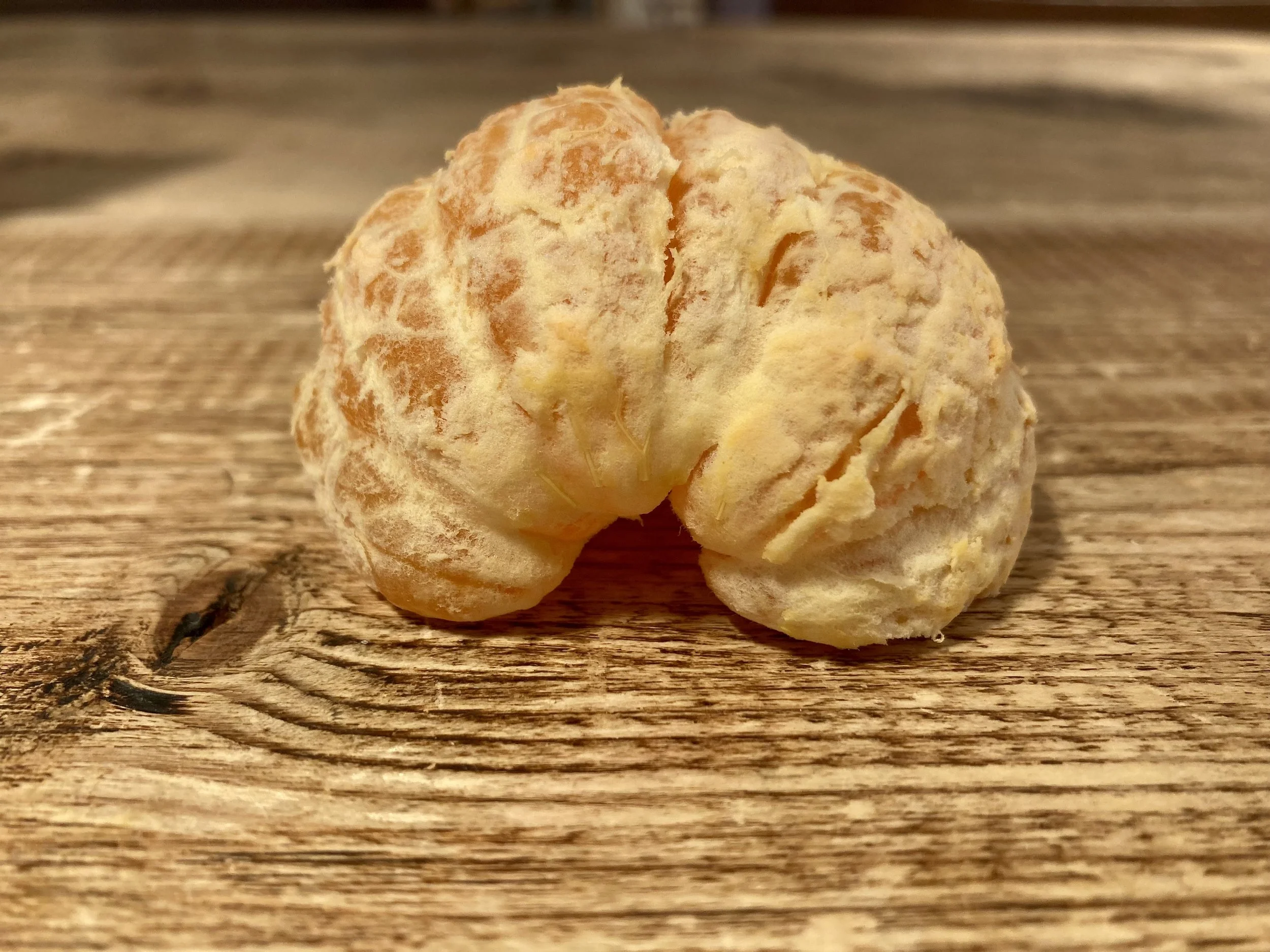
The Clementine Bridge is a desktop classical loaded arch: two segments meet to form an arch-like ring, and their own weight acts as the permanent “fill” that keeps the structure in contact by pushing compressive forces through the curve. In a real masonry bridge, that compressive flow is tracked by the thrust line (or line of pressure)—the notional path of the resultant compressive force within the arch ring—and stability depends on keeping that line contained within the thickness of the material so the arch stays in compression rather than cracking open in tension. In this example, there are no abutments: nothing substantial to resist horizontal thrust or prevent the “feet” from sliding apart, except friction on the table and the weak, moist cohesion of the segments. So the thrust line has nowhere reliable to terminate, the base will tend to spread, and the whole thing is poised to fail under even a light added load—less a triumph of Roman engineering than a demonstration of how crucial the abutment–foundation system is to an arch’s survival. But, having said that, it would be a perfect bridge for a line of foraging ants, perhaps crossing a trickling stream or rill.